Re-claiming your practice
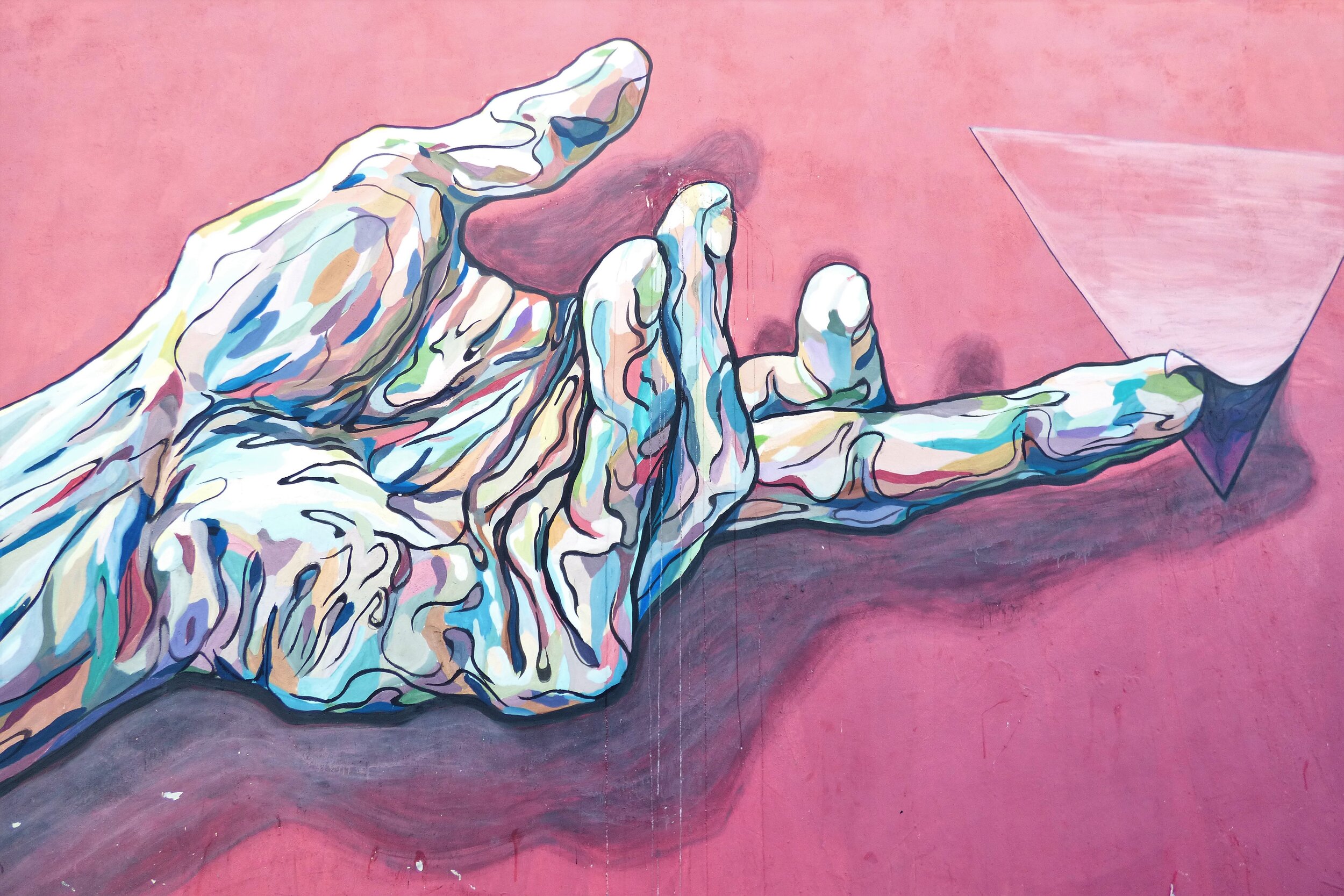
Somewhere along the line, I forgot what I was good at and what I loved to live for. My ideas of what I wanted to do and who I could become became disfigured; all too influenced by the sight of others around me. A part of me became more concerned with these competing with the images I had surrounded myself with, rather than choosing to curate my world in a way which fed my soul and encouraged my talents. It’s definitely challenging living in a modern information soup where personal identity becomes brand and craft becomes product.
Everyone’s doing something online. Everyone has advice to offer or an opinion that you need to hear. Fighting for a slice of the content pie because content is the new cash, right? Where’s it all coming from though…? From where in the human - in the mind and intention - does all this emerge? Are we putting this stuff out there because we truly have energy and love to give others and we want to help? Or are we doing it because we have all become fearful, struggling instapreneurs, trying to justify ridiculous screen time by telling ourselves we are caring and compassionate?
I know I’ve been the latter. Posting because I’m afraid not to; because I’m afraid of slipping into irrelevance and living off a mediocre hourly wage for the rest of my years. Pushing onwards not because I have a living, breathing fire in my belly, but because it would seem ridiculous not to teach people what I know when I can be paid for it. I’ve had skin in the game of training the body for years. I’ve made many mistakes and spent many months scouring my tired and broken body for pieces of wisdom to share. This has left me at times quite confused, because what I’ve learned from it all is far bigger than what I bargained for, and knowing how to share it with others requires some thought. I used to think that I was a strength or movement coach, but what I’ve realised is there’s a big issue with only teaching people about the outward, visible aspects of practice. Looking at the ‘how’ becomes very boring unless we also look at the ‘who’ and ‘why’.
When I consider the value I’ve extracted from movement over the years, across countless different disciplines, I realise that the substance was not so much in the tangible changes but rather the intangible ones. Who I have become as a result of my practice, and what my choice of practice says about me, are equally as important as the practice itself. I know from practicing handstands that the value is in the focus; the meditation; the inversion of my perspective through novel experience. The image and the aesthetic were flattering too, and acted as effective symbols of the world of experience that awaited. The picture of a straight handstand drew me in without my knowing what it would offer me.
When I first started with training, lifting weights was my thing. It was a way to become proud of myself and stand with confidence in my own presence. I wanted to be attractive and physically powerful. I wanted to be the picture of a potent, capable manly figure who could bend the world around him to his will - and this image is why I started. In case you haven’t realised, it has been a very self-interested process, and it still is - even and perhaps especially, teaching. But there is a strange, religious attitude which pervades the physical disciplines. There is a certain pride and elitism amongst those who have sacrificed a lot, and this sits uncomfortably with me. So many of the ‘serious’ handstand practitioners rarely ever play, because too much play would slow them down on the road to their next skill. They look down upon those who do play, as if the play denotes laziness or lack of grit.
So many weightlifters start out because they want to look good or feel strong, and end up forgetting this totally as they chase bigger and bigger numbers. These same weightlifters will eventually say ‘it’s not about aesthetics - it’s all about being strong’ despite the fact they started out in pursuit of a more flattering self-image. Many ‘movers’ will tell you its about the principles of blah blah, and not about the aesthetic or the party tricks, despite the fact that they started ‘moving’ because of these things. It all reeks of ‘high horse’, and if you don't keep your wits about you, you might get the idea (as I did) that I should renounce my feelings or demonise the more ‘egotistical’ side of my practice, even though those things were what fuelled my fire. Ironically, demonising the ‘self'/ego’, and its role in practice is the biggest ego trip I can think of. Whatever spin we put on the story, there is always instant gratification - it just looks different for different people. Before I knew this, I was tortured by the idea that I wasn’t doing enough to deserve joy in my practice.
But wait a second… when did doing something because it was flattering or gratifying become a dirty act? When did we start pretending to care more about the discipline and not about our internal world of felt experience? When did we morph from the consumer of the thing we love, to just another bloody product? It’s time to re-frame the thinking around this. Whether we’re practicing to understand the intricate technicalities of movement, sitting to meditate or simply to hit a big heavy squat, we’re looking for some kind of self-gratification, and that’s normal and necessary. Many will pretend they are above self-gratification, but understand that this is true for precisely nobody. We do what we do because we enjoy (on a deep level, not always smiles and laughs) how it makes us feel about ourselves - even if we don’t understand how. It’s a dishonest move to pretend otherwise. When you sacrifice something that matters for the sake of a greater purpose, you’re just buying yourself permission to feel deserving of the rewards.
When we don’t admit the way our ideas about identity and self-worth affect our practice, it’s like we’re walking around with one eye shut. As always, the full picture is obscured when we do not acknowledge these fundamental drivers of behaviour. And because honesty about our emotions towards practice can feel exposing and unflattering initially, many of us will blame ourselves when we come up against difficult roadblocks. Because so few people talk about quitting, we deem ourselves to be unworthy, like a faulty product, when really we just need to find a better fitting craft or explore different mindsets. Because we watch others on what appears to be a linear path to success, we forget that their inward journey may look very different from their outward journey. What a delusion! What about those people who genuinely don’t seem to be struggling? More and more, I get the feeling that thee are the people who still maintain a mutually beneficial relationship with their practice. Their secret is to remain either flexible with the contents and type of practice or flexible with their mind in order to soften into the rigidity of outward struggles.
If it’s all getting too much and you’ve lost the joy for what you do, you may want to consider quitting for a while. How long is up to you… but by wiping the slate clean, we can re-imagine what the word ‘practice’ means to us in an authentic way and start afresh. We all deserve to re-claim the humanity in our respective crafts and find gratification of some sort in every session. There is a way - but it requires flexibility, honesty and occasionally, some time away from the influences and unsolicited advice of others.
If this is you, and you’d like a sounding board, reach out. You don’t need permission to rip up the canvas and start again with your own colour palette and brushstrokes. You can practice in a way which brings you both internal joy and outward gain. Take back the power of being a conscious, free consumer, and not only a product of your daily experience. We all have a personal brand or identity costume of some sort. That isn’t the problem. The problem is choosing one that fits comfortably, so if you haven’t already (congratulations!) then stop contorting yourself into someone else’s life and start building your own. It can be a life-changing and deeply satisfying process.